


A tree planting project is made of several stages. In this blog you can read our tree planting timeline outlining the key steps – from having an initial idea to enjoying the benefits of maturing trees.
Year 0: Planning and Preparation
Check Site Conditions
When: before applying for trees
It’s important to assess your site ahead of time and ensure the potential planting location is actually suitable for trees. Consider how much sunlight the area receives – most trees like plenty of light, though some can grow in shade. Look at the soil: is it wet and heavy, or dry and sandy? Different trees do better in different soils, so knowing what type of soil you have will assist in selecting the right trees.
You should also think about the amount of space available. Make sure there’s enough room for trees to grow tall and wide without impacting adjacent buildings or extant trees. There may be underground services such as pipes or cables that could be affected by roots as the trees establish. Will the planted areas continue to be accessible and beneficial for patients, staff and the wider community?
Unsure how much space might be required? Check out our short guide to tree numbers and spacing.
Selecting Suitable Trees
When: before applying for trees
Our tree bundles are designed as ‘generalist’ mixes that will thrive in most locations. We focus on native species well suited to the UK environment and that will provide valuable habitat for wildlife. In very wet or exposed sites, species choice may be more limited, but in lower-elevation areas with reasonably good soil, most UK species can generally be established. Planting a mix of species can reduce the risk of disease, increase biodiversity, and create a more resilient landscape.
If you’re unsure, please get in touch and we will be able to suggest the species best suited to your local conditions. Choosing the right trees for the right place helps ensure they will grow strong and healthy.
Ordering Trees
When: late spring into the subsequent planting season
You can apply for trees from NHS Forest throughout the year. Details of our updated tree programme for the next planting season are normally announced on our website in late spring. To get started, just submit an Expression of Interest with some information about you and your healthcare site, an indicative tree request, and your ideas for how trees might be planted. NHS Forest will then review the request and may follow up if we have any questions or if your project involves larger-scale planting.
Once your Expression of Interest has been approved, you’ll receive a link to a second webform where you can review and confirm your order and to sign our planting agreement. You’ll also need to provide details for delivery and to specify the locations where trees will be planted at your site. This form should give us everything we need to process your tree order during the upcoming planting season.
How long will it take?
From the initial enquiry to a signed agreement can take less than a week. Submitting an Expression of Interest should take no more than 10 minutes, and most are approved within three working days – though this might take a little longer outside the planting season. Once you have all the details ready, the order confirmation form usually takes about 20 minutes to complete.
Site Preparation
When: October – November
Preparing your site properly will give your trees the best possible start. Clear weeds, shrubs and long grass to reduce competition for water and nutrients and remove any roots or perennial plants that might regrow. If the soil is very compacted or drains poorly, loosen it before planting.
You can use canes or spray paint to mark tree positions in advance. While not essential, this can help achieve more even spacings – particularly where volunteers will be planting – and may make it easier to visualise the trees’ proximity to paved areas, buildings or nearby trees.

Credit to Pixabay..
Year 1: Tree Planting
Planning a Planting Event
When: before confirming the delivery date
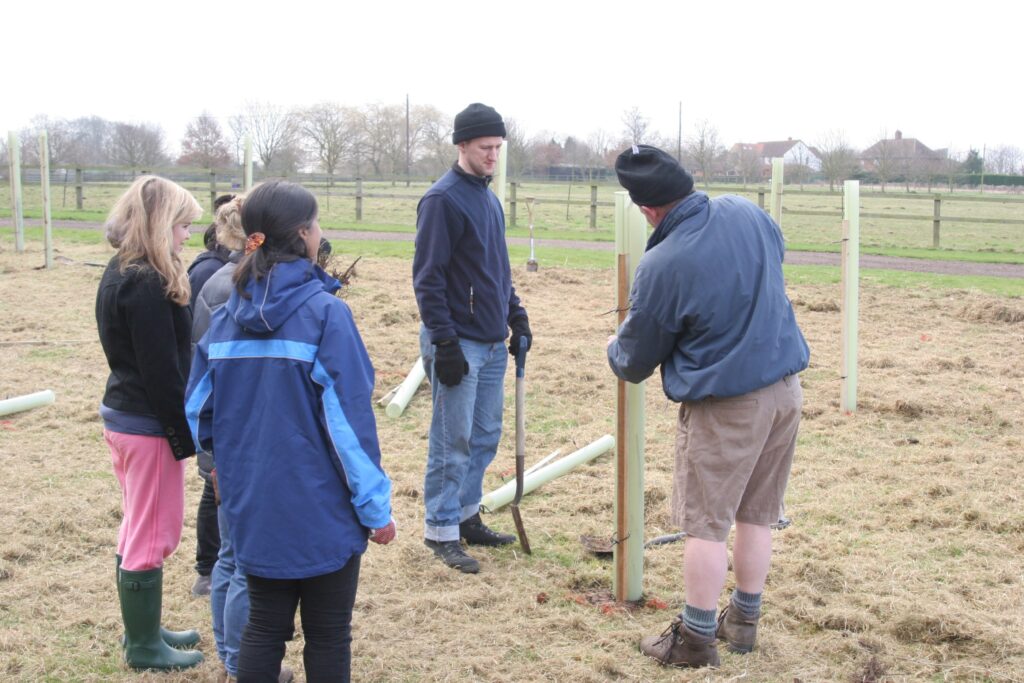
Planting events are a fantastic opportunity to involve staff, patients and volunteers. Our blog has a few suggestions.
You could also promote any public events on NHS Forest’s volunteer matching page.
Tree Planting Season
When: November – March
Winter is the best time to plant trees. The soil is naturally soft and moist, and trees are dormant which reduces the risk of transplant shock when they are moved from the nursery to their new home.
NHS Forest fulfils tree orders throughout the planting season, from November through to the end of March. We coordinate with recipients to plan deliveries around scheduled planting days and adverse weather – though please be aware that a minimum of two weeks’ notice is required before delivery.
Cell grown trees are supplied ready for direct planting in the ground. There’s no need to soak roots in water or ‘grow on’ stock in containers prior to planting (both practices can actually be detrimental to the trees’ long-term health). Planting sundries are also included, so the trees really can be planted straight out of the box – or can be stored for up to four weeks if it’s not possible to plant immediately.
Want to learn more about how to plant trees? Take a look at our comprehensive planting guidance.
How long will it take?
While timing can vary, a first-time planter should expect to spend around five minutes per tree on areas of flat ground with minimal existing vegetation, such as mown grass. This includes fitting the including sundries. With one or two helpers, the time per tree can be reduced – many hands really do make light work.
Initial Aftercare
When: April – May
As spring arrives, newly planted trees may take longer to emerge from dormancy than established trees nearby. Budburst often begins from March onwards, but visible above-ground growth may be slow at first as trees prioritise root development.
Spring is the ideal time to check that tree shelters and mulch mats are still secure, as warmer weather increases both weed growth and browsing by mammals. During dry spells trees should be watered two to three times per month to support healthy establishment.
The First Summer
When: June – August
Summer is the most critical period for newly planted trees. Although longer daylight hours encourage growth, young trees are especially vulnerable to drought due to their shallow root systems. Regular checks and deep watering – ensuring water soaks into the soil rather than running off – can dramatically improve survival rates.
Watch for signs of water stress such as wilting or curling leaves, leaf discolouration or scorch, bark splitting, shoot dieback, and dry or cracked soil. Premature leaf drop may also occur and, while worrying, is not uncommon in the first summer after planting – even when trees are being watered – so there is no need to panic.
Removing grass and weeds that compete for water is equally important. Mulch mats can help suppress growth, but regular hand-weeding around the tree base and inside shelters greatly improves growth and establishment. Adding an extra layer of biodegradable mulch can also help retain soil moisture.
How long will it take?
Watering and weeding require a significant time commitment during the first few growing seasons but have a huge impact on tree survival. Aim to spend around 10 – 15 minutes per tree each week during the main growing season. Involving volunteers can help share the workload and make maintenance more manageable.
Years 2 – 4: Establishment and Maintenance
Beat Up
When: November – March
“Beating up” refers to replacing trees that have died or are failing to thrive during the early years. This work is usually carried out in winter, after identifying underperforming trees during the previous growing season. Replacement trees can be ordered free of charge from NHS Forest as needed.
Weeding and Watering
When: April – August
Young trees remain vulnerable for several years to competition for light, nutrients, and water, as well as damage from browsing animals. Planting sundries such as shelters and mulch mats help protect trees, but only if they are correctly fitted and regularly checked.
Continue to monitor tree growth, adjust shelters as needed, remove weeds and grass, and water during dry periods. Over time, the trees will become more resilient and require less intensive care.
What does success look like?
Tree establishment takes time. In the early years some losses (typically around 5-10%) can be expected and are accounted for in our planting density recommendations. Healthy trees will show consistent seasonal growth and increasing resilience.

Year 5 and Beyond: Independence
After five years, the trees should be well established and require much less maintenance, although some ongoing care is still important. As canopies develop and shade the ground below, weeds and grass are naturally suppressed reducing the need for regular weeding. Occasional monitoring is still recommended.
Watering is typically only necessary during prolonged dry spells, and mulch can be gradually reduced. Tree shelters may also be removed once trees are growing well – ideally when the main stem (excluding branching) is around three metres in height. Slower-growing species may take longer, and if unsure it’s usually best to leave shelters in place a little longer. Damaged or diseased branches can be pruned as needed to support long-term tree health.

Growing a Legacy
Following this timeline your tree project will grow into a thriving, resilient landscape that benefits both people and wildlife. While the first few years require dedication and attention, the rewards – shaded spaces, cleaner air, enhanced biodiversity, and a lasting positive impact for your healthcare site – are well worth the effort. Tree planting is not just about placing trees in the ground; it’s about nurturing them so they can flourish for decades to come. With careful planning, consistent care, and a bit of patience your site can become a living legacy for generations.
What next?
Check out our short guide to tree numbers and spacing.
Take a look at our comprehensive planting guidance.
View our tree ordering pages (tree orders are usually open May until late February)