

By Dr Duika L. Burges Watson – Newcastle Nature Recovery Ranger
Pointy end up
On Monday, my sustainability colleague Karen and I took 16 children and four staff from the hospital nursery into the labyrinth. Karen had hidden bulbs along the path like treasure, and as the children found each one, their faces lit up with discovery. When we reached the centre, they learned something valuable: pointy end up.
Then came the jumping – sixteen small humans bedding in camassia and muscari by bouncing on grass plugs, collapsing in giggles, then attacking the leaf piles. The staff took photos, laughed, joined in.
Walking past Freeman pond afterward, they tugged at my ranger trousers. “Ranger, Ranger – are there fish?” “Ranger, look what I found!” “Scuse me, Ranger!” I told them about the water boatmen they’d see next time we met for a pond dip. I showed them a dandelion leaf and how it looks like lion’s teeth. They were wide-eyed, delighted.
This happened on a Monday morning in late autumn. But the evidence tells us it should be happening more widely and at every NHS site.
The gap we found locally
A recent staff survey revealed that 47% of Freeman staff didn’t know green spaces existed on site, some after working here for a decade.
Yet 73% value access to green spaces. 82% want more. 47% specifically requested sensory gardens.
The wellbeing data explains why this matters: 40% feel tense or wound up most of the time. 38% have frequent worrying thoughts. Only 41% feel cheerful most of the time. Only 21% can see green space from their workplace.
When staff do access green spaces: 67% report enhanced wellbeing, 63% reduced stress, 51% reduced anxiety.
The gap between what people need and what exists/they know exists is enormous.
What the evidence says
The government’s Fit for the Future 10-Year Health Plan (2025) recognises that “the roots of sickness too often lie in poverty, poor housing, poor education, poor work and poor access to the things that make life worth living.” It positions the NHS as an “anchor institution” with responsibility to intentionally manage land for positive social, economic, and environmental impact.
The Centre for Sustainable Healthcare’s Nature and Health Resources Project found that spending time in green spaces on NHS sites led to better wellbeing of staff. Yet their survey revealed the top barriers healthcare professionals identified: awareness, access, and time constraints—exactly what we found at Freeman.
The evidence on nature engagement is clear. 47% of people in England lack access to green space within 15 minutes’ walk. People in socioeconomically disadvantaged groups have less access to quality green space and visit natural environments less frequently. The Environment Improvement Plan 2023 committed that everyone should live within 15 minutes of green or blue space—but for many NHS staff and patients, that space needs to be where they already spend their time.
The new RHS State of Gardening Report (2025) found 77% of gardeners report positive mental health impacts. For children: 74% say gardening makes them happy.
The response
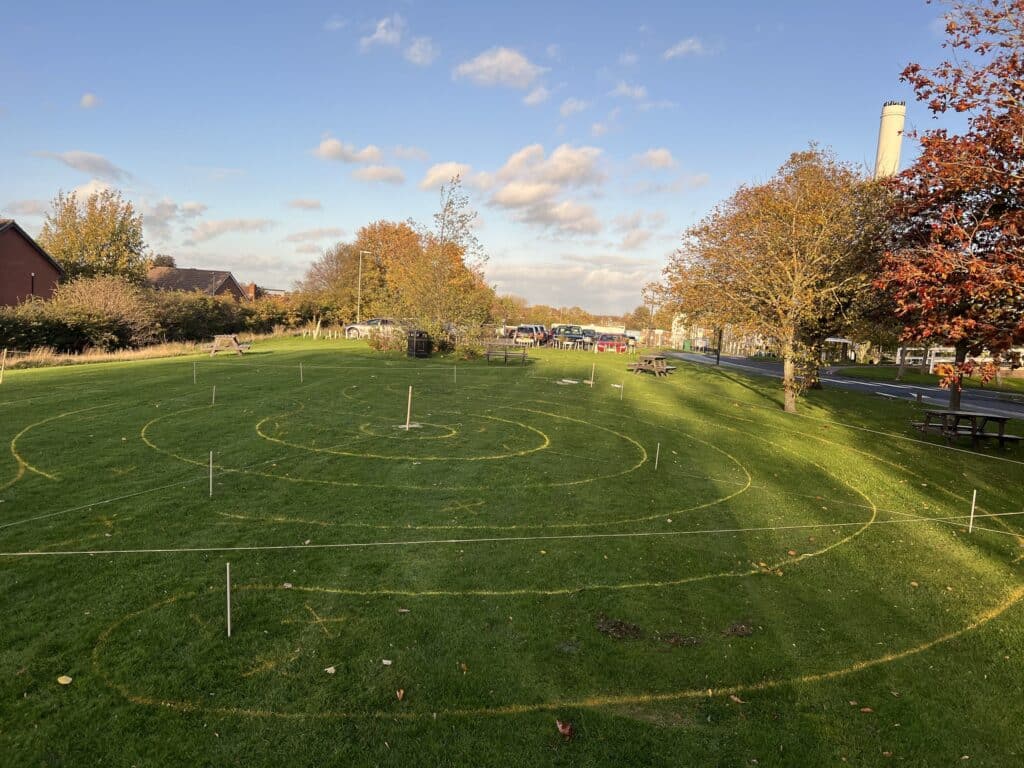
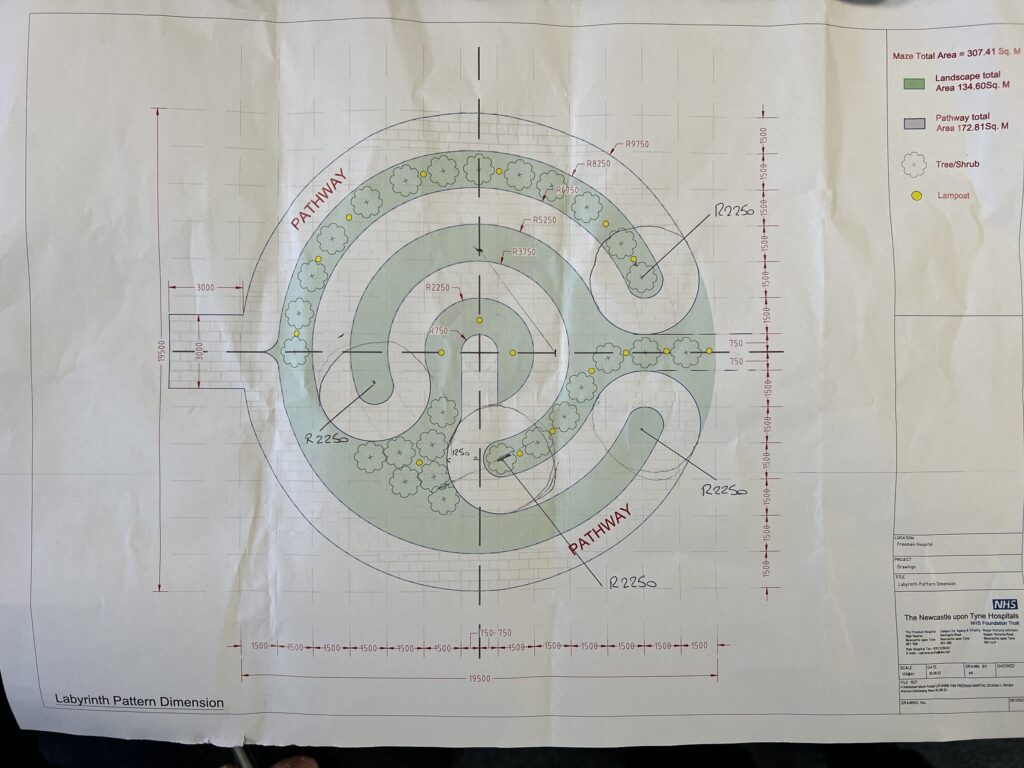
The Freeman labyrinth: 20 metres of walking meditation path, wide enough for wheelchairs. 3,000 spring bulbs creating a sensory journey from entrance to centre. Purple crocus in February, fragrant muscari in April, architectural alliums in May.
Visible. Accessible. Five minutes to walk or thirty to linger. Multiple purposes: meditation, grief, celebration, connection.
Cost: £334.75 in bulbs.
What’s happening?
October 2025: Five planting sessions. 75 staff from across the Trust – chaplains, domestics, estates, OTs, microbiology, public health – came together to plant.
Staff from different departments worked side by side, some planting bulbs for the first time. The conversations that emerged – about the hospital, about nature, about simply being outside together – reminded us why green spaces matter.
Early November: the momentum has continued. The charities team – six strong – planted a carpet of camassia and purple allium. The laundry team walked the labyrinth path during their break, discovering what had been created. Next week: research nurses and hospital green champions, with more teams asking to join.
People are finding the space. Using it. Making it theirs.
Sometimes the act itself matters, regardless of what happens later.
But it’s only temporary!
That’s what people say when they hear there’s a risk this land may be needed for car parking. And they’re right – it might be.
This uncertainty has forced different thinking about what we’re creating. What matters isn’t always permanence—it’s experience, connection, the act of caring.
Those children will remember planting. Staff from different departments will remember working together. Staff who walk the path, sit in the centre, smell the first crocus—they’ll remember.
Next spring: unexpected beauty. Pollinator support. Evidence this hospital values more than efficiency.
And if eventually this becomes a car park? The skills transfer. The relationships endure. The memory informs what we create next.
The vision
47% of people in England lack green space within 15 minutes’ walk. Those in disadvantaged groups have even less access. Evidence shows increasing access addresses health inequalities.
Hospitals are anchor institutions. Large estates. Thousands of employees. Serving everyone. Places where people come most vulnerable.
The barriers aren’t financial. Our labyrinth cost less than the cost of a single day’s staff sickness absence. The barriers are awareness, permission, imagination, and courage to create something, even if only temporary.
Next
February: crocus bloom. April: muscari. May: alliums.
We’ll document, track, measure. Add to the evidence base.
Sixteen children know how to plant bulbs now. Pointy end up. They’ve jumped on earth and laughed. They’ve learned they can make things grow.
That knowledge is permanent, even if the labyrinth isn’t.
Key resources
Fit for the Future 10-Year Plan
Environment Improvement Plan 2023
Bratman et al (2024) Nature and human well-being: The olfactory pathway
RHS State of Gardening Report 2025
Centre for Sustainable Healthcare Nature & Health Resources Report
Ulrich (1984) View through window & recovery, Science